sarah bennett |
pocketing
 |
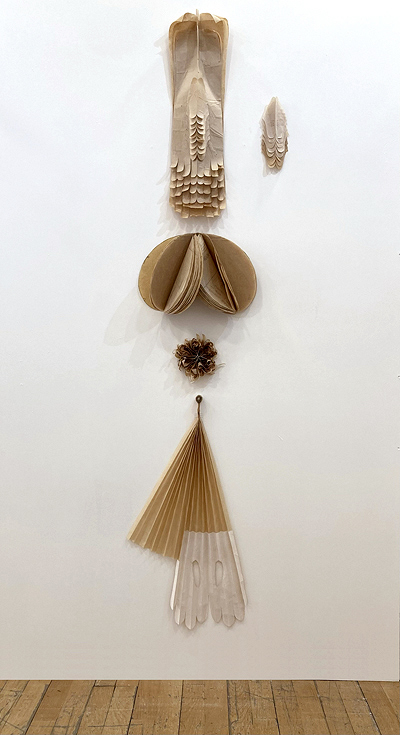
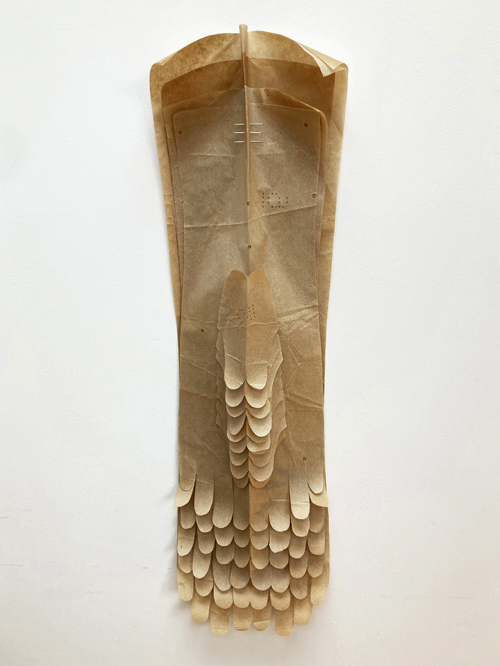
Women want and always wanted pockets to be designed into their clothing, and in past centuries women across all social strata ingeniously addressed this lack by stitching and embroidering their own pairs of tie-on pockets in which to secure their coveted personal belongings; including for working women their tools and earnings. The initial impetus for Pocketing came from a performance1 comprising extracts from Samuel Beckett’s writings that included the 'sucking stones' (Molloy, 1951) in which the protagonist ruminates extensively on how to move 16 stones, in sequential order, between his four pockets and his mouth, such that all the stones get sucked. The gravitas conferred on the two pockets in Molloy’s great coat, and the two pockets in his trousers reignited my irritation at the lack of pockets, let alone spacious pockets, in my own wardrobe, and I decided to count how many, out of all the dressmaking patterns I’d inherited from women in my family, included pockets as integral to their design. Not many. Soon I had cut them all out. Furthermore, reflecting on the proximity of hands to pockets prompted the making of the five elements that hang together as Pocketing; with the separate pattern pieces being copied, cut, layered and pinned together in unfamiliar, seemingly unruly sculptural configurations whilst still, tangentially, referencing women’s bodies, labour and experiences. |
| 1 The End is in the Beginning, a Living Room Theatre production in 2025 entailing a compendium of Samuel Beckett extracts performed by Philip Robinson and Sarah White, directed by Nikki Sved. |
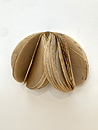
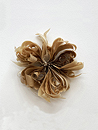
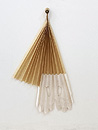
rollover/click thumbnail to view a larger image
| Photos: Sarah Bennett |